Ancient wisdom, modern care
About Chinese Medicine
Traditional Chinese Medicine is both an art and a science of healing — an integrated system with thousands of years of clinical experience.
A whole-person system
Traditional Chinese Medicine (TCM) sees the body as an integrated whole. Disease may originate in one place and manifest in another, caused by an imbalance in the wider system. The principal aim of TCM is to restore equilibrium between the physical, emotional and spiritual aspects of the individual.
TCM has an impressive history of alleviating pain and improving the symptoms of many chronic conditions, and is used today alongside modern western medicine in hospitals across China and increasingly in the West.
Yin & Yang — the principle of balance
TCM is based on the harmonious coexistence of yin and yang — the two opposite yet complementary forces that exist in everything. When yin and yang are in balance, the body is healthy. When the balance is disturbed, illness follows.
The TCM practitioner's job is to identify where the imbalance lies and gently bring the system back to harmony, using acupuncture, Chinese herbs, cupping, moxibustion and Tui Na (acupressure massage).
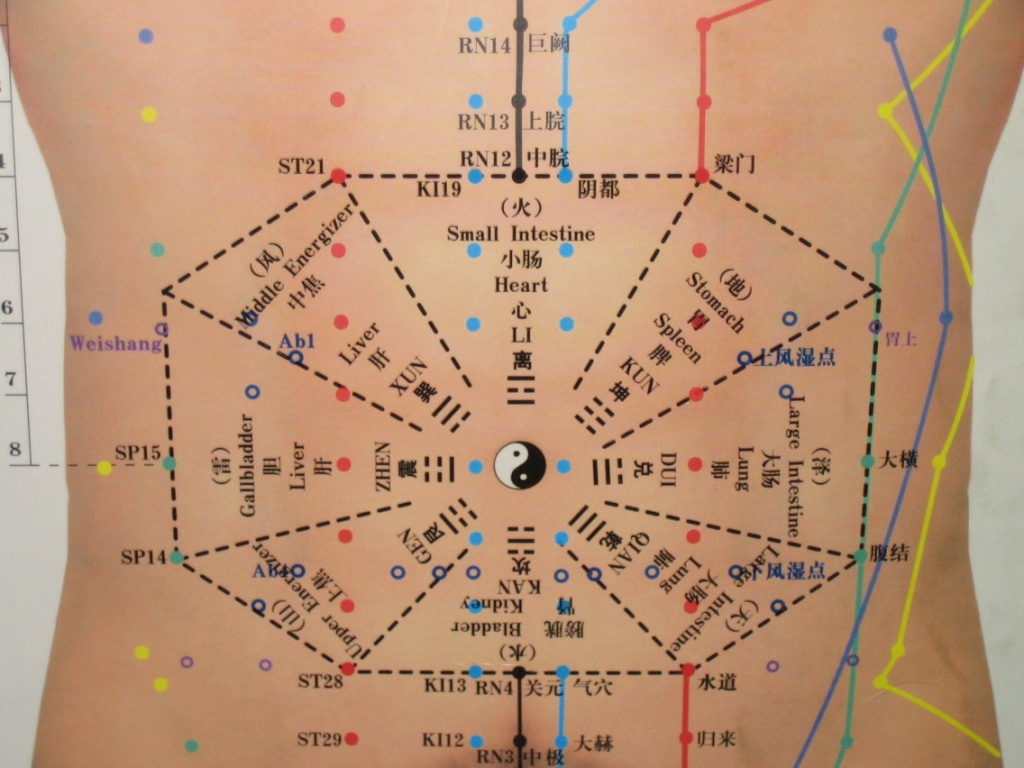
Qi and the meridian system
Qi is the vital life force that flows through the body along channels called meridians. Each meridian is associated with one of the internal organs. When Qi flows freely, the body is nourished and healthy. When Qi is blocked, deficient or stagnant, pain and illness arise.
Acupuncture works by inserting very fine sterile needles into specific points along these meridians to regulate the flow of Qi. Chinese herbs, prescribed individually, support the body internally — strengthening organs, clearing pathogens and rebuilding vitality.
How a practitioner diagnoses
Diagnosis is based on close observation of the tongue, the pulse and the skin, careful questioning about symptoms, lifestyle and history, and palpation. From these signs the practitioner builds a picture of the patient's individual constitution — and tailors treatment accordingly.
Treating the patient as an individual is at the heart of Chinese Medicine. Two people with the same western diagnosis may receive very different TCM treatments depending on their underlying pattern.